While celebrating Barça deservedly winning LaLiga, we decided to add a new page to our site.
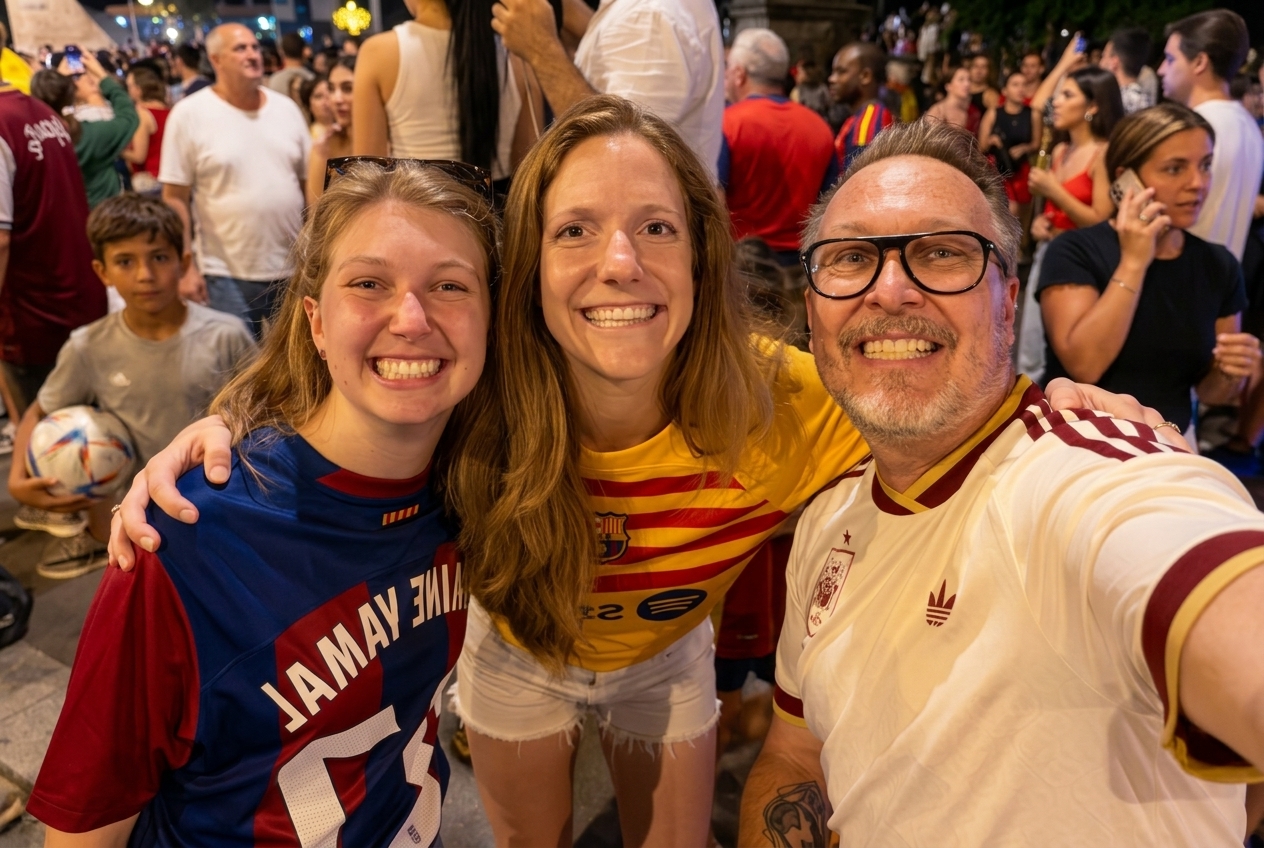
You see… We’re Socis. We have season tickets to the Femení (working on that for el primer equip!). Our Instagram feeds are basically a Barça highlight reel on weekends. All matches are appointment viewing when we can’t be there in person. El Clásico is a religious experience. We even hate-watch when Madrid plays someone else, hoping the universe does its job.
We check the table constantly, so at some point, we just built something worth looking at. The LaLiga Guide started as a personal tracker and grew from there. It covers all 42 clubs across both divisions — División 1 and LaLiga Hypermotion — with current standings, club nicknames, what us Barça fans think about each team, and the cities they call home, mapped across the peninsula. Tap any club to pull up details. Color-coding shows you at a glance who’s in Champions League contention, who’s fighting for Europa spots, and who’s sweating the drop.
We added geographic and nickname context for visitors who follow the football — yes, soccer, American friends — but might not know where Getafe is or why a team from the Canary Islands is in the Spanish top flight. The whole thing pulls live data and updates automatically every Monday, so it stays current going into each week’s fixtures.
We’ve been maintaining a Barcelona Visitors Guide for friends on this site for a while now — a running list of neighborhoods, restaurants, cafes, bookstores, markets, and things to do for friends and family visiting the city. It was useful. It was also, if we’re being honest, kind of a wall of text.
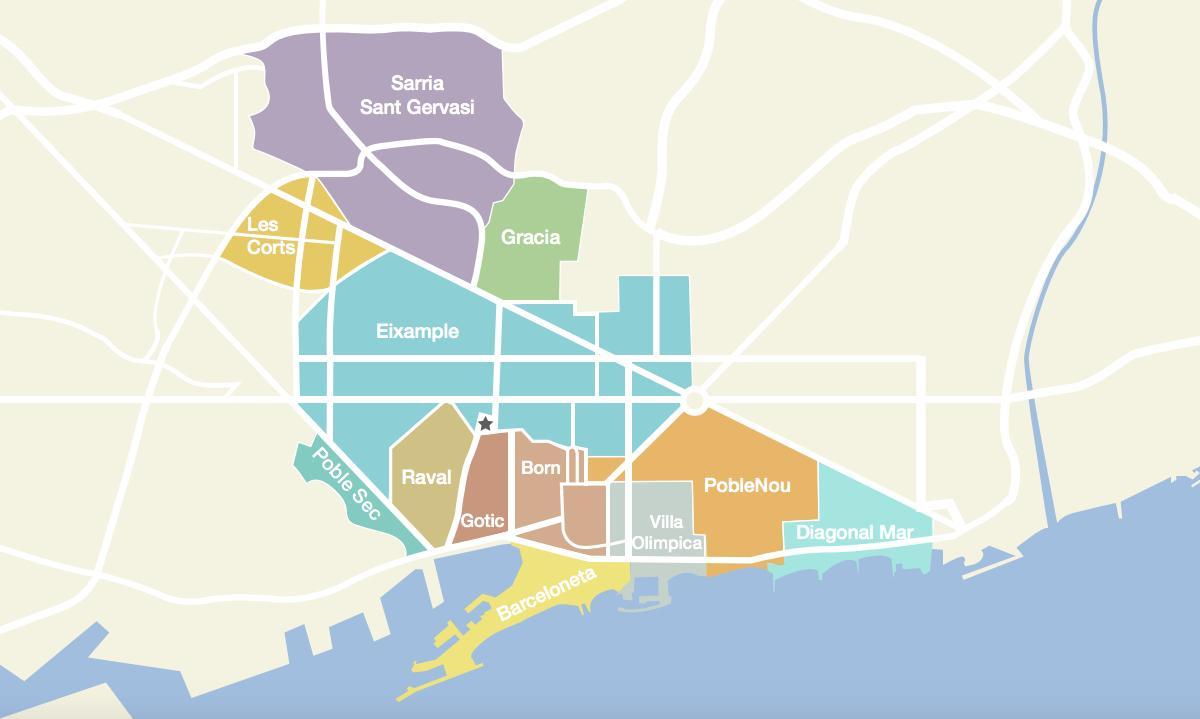
We rebuilt it. The guide is now organized by neighborhood, with everything collapsed by default so you can go straight to the area you care about rather than scrolling through places you don’t. Looking for something to eat in El Born? Click El Born. Done. No more hunting.
We also cleaned up the navigation, added a quick-jump neighborhood grid at the top, and generally made the whole thing easier to use on a phone — which is probably how you’re reading it when you actually need it.
The guide now covers 14 Barcelona neighborhoods with recommendations across restaurants, coffee, bars, markets, bookstores, street art, and more. We’re treating it as a living document (made a bit easier to update with our buddy Claude) — new places get added as we find them, and we’ll keep building out neighborhoods that are still a little thin.
https://petsolt.com/wp-content/uploads/2021/05/neighborhoods-of-barcelona-map.jpg7191200Davidhttps://petsolt.com/wp-content/uploads/2024/07/petsolt_logo_2023_catalan-300x300.pngDavid2026-05-09 16:57:592026-05-16 17:56:40The Barcelona Visitors Guide Got an Upgrade
Maybe a few that were a bit more impromptu and didn’t make the notebook. And many that happened along the way on adventures outside of Barcelona. A sundowner in the bush, a picnic on a sailboat along the coast, or a quaint bistro in one of the numerous places we were lucky enough to visit in 2025. Then there were the places we got to experience with family and friends. Not as intimate, but still some highlights of the year.
And the re-citas — those places that were not new, but favorites and worth a second… or tenth visit. Lots of those too. Barcelona, in particular, is never-ending with amazing food and vibes for a good date or gathering with friends. Having Kate pick and plan so many for just the two of us to be together and experience a new place was amazing. It is going to be hard to top 52 Citas!
Here are just a few we’ve been able to share in 2025, that are not part of the “official” 52 citas.
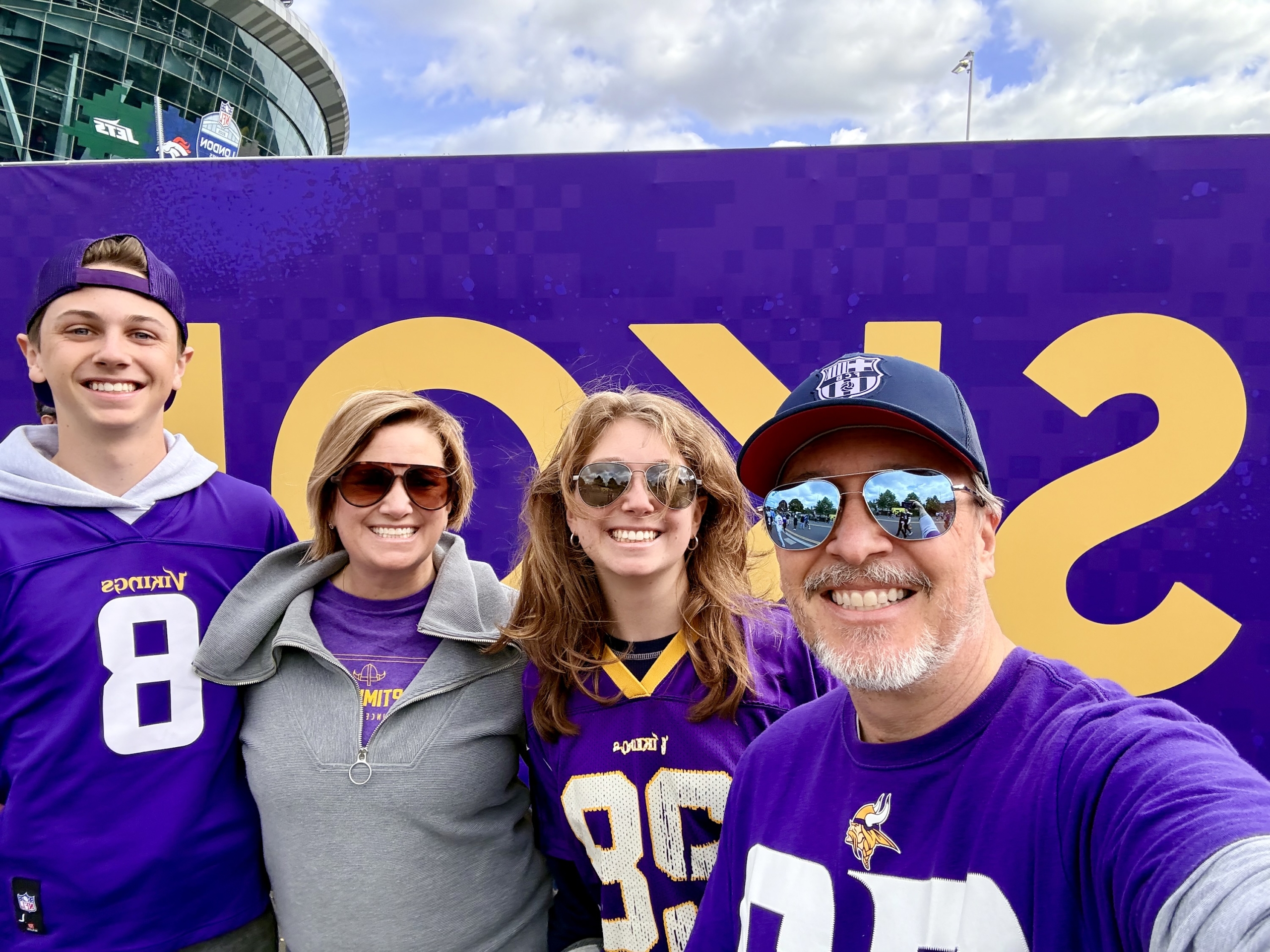
Beyond the other trips, summer and fall were busy. We made it to London a couple of times to see Lilly and catch a Vikings victory, and had visits from both friends and family. We had an amazing Thanksgiving, and were just exploring.
https://petsolt.com/wp-content/uploads/2026/01/2025-12-Fall-4-of-15-scaled.jpeg19202560Davidhttps://petsolt.com/wp-content/uploads/2024/07/petsolt_logo_2023_catalan-300x300.pngDavid2026-01-01 20:43:112026-05-16 13:56:1523 from Summer & Fall ’25
Not that long ago, Poblenou had almost no decent coffee spots. But that’s changed. With the startups came the coffee shops. Now it is common to trip over three or four on a single block — all local, all unique, all worth trying.
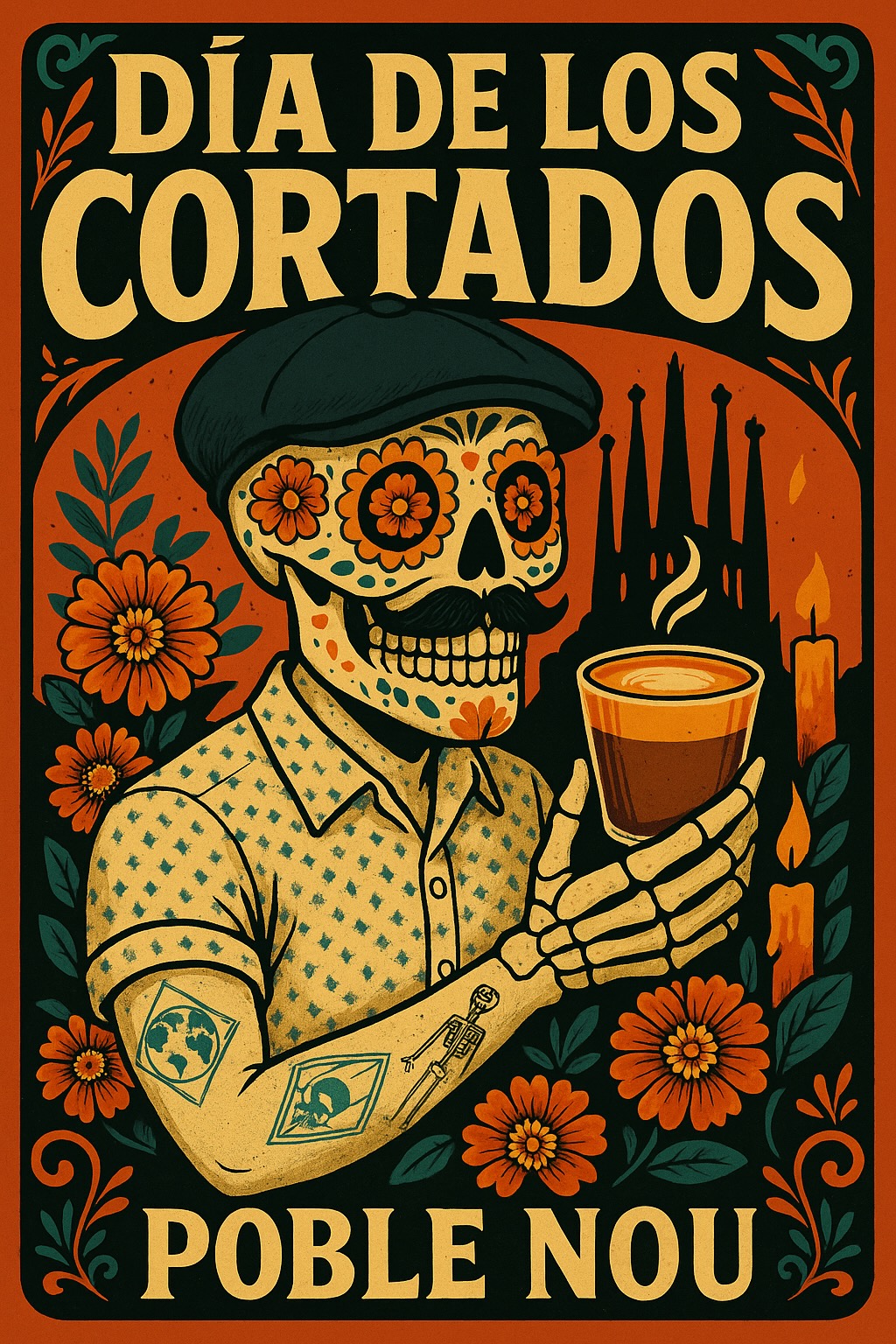
So we did the only reasonable thing: made a day of it. I love a theme and a logo! Eight stops. Seven cortados. One vermut (we needed to calm those heartbeats down somehow). A medley of tiny stools. And no two cortados alike.
We called it Día de los Cortados. Everyone got a stamp after each café, and by mid-afternoon our hands looked like we’d been rubbing up against poison ivy. Lilly documented the group’s descent from “chill curiosity” (#1), evolving into “lots of ‘ideas'” (3) and what she described as “squirrely / ADHD” (#4), and finally “rambling” (#6). Accurate.
Along the way, we rated the coffee (and sometimes the chairs), coined new terms, debated whether Michael invented pants, learned from Anna that, “I’ve had four cortados, I can do what I want.”
The day was a long, zigzag walk with warm cups, familiar voices, and the creation of new stories.
With a cortado. Or seven.
Our rating:
Here are the ratings and how we described each place. Yeah, sometimes people used numbers to describe. It is what it is.
https://petsolt.com/wp-content/uploads/2025/11/All-Photos-1-of-1.jpeg15361024Davidhttps://petsolt.com/wp-content/uploads/2024/07/petsolt_logo_2023_catalan-300x300.pngDavid2025-11-30 23:28:222026-05-16 13:56:12Día de los Cortados
This post is a bit for me, actually. This city immerses you in art, and I’m always curious to learn more. So I did a little research project to highlight some of the main influential artists who were touched by Barcelona. Then I realized it might be a good read for friends and family visiting us, so I’m sharing it here…
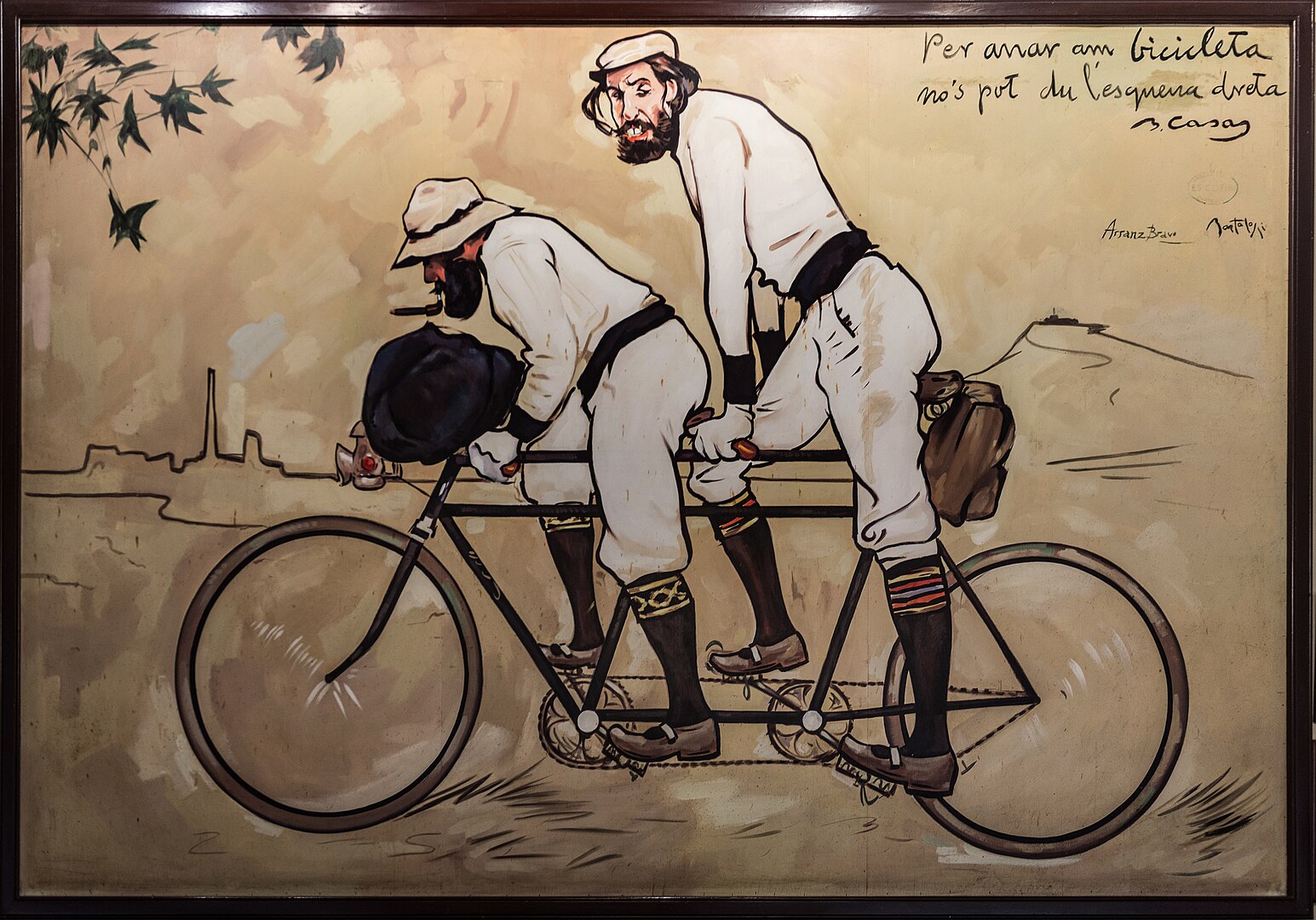
“Ramon Casas and Pere Romeu on a Tandem” (1897), a painting by Ramon Casas
The Artists, Architects, and Writers Who Made Barcelona Iconic
Barcelona’s creative spirit has inspired architects, painters, and writers since Roman times, but we’ll focus on the last century or so, from Modernisme to the present. This guide highlights notable figures—past and present—who were either from Barcelona or spent significant time shaping its artistic and cultural identity.
Architects
Modernisme Era (Late 19th – Early 20th Century)
Antoni Gaudí (1852–1926) – Catalan architect and the leading figure of Modernisme. Gaudí spent most of his life in Barcelona, where he designed its most iconic landmarks, including the Sagrada Família, Park Güell, Casa Batlló, and Casa Milà (La Pedrera). His organic, nature-inspired style defines the city’s skyline. https://en.wikipedia.org/wiki/Sagrada_Fam%C3%ADlia
Lluís Domènech i Montaner (1850–1923) – Born in Barcelona, Domènech designed ornate landmarks such as the Palau de la Música Catalana and Hospital de Sant Pau, both UNESCO World Heritage Sites. His work blended structural innovation with rich decoration. https://en.wikipedia.org/wiki/Palau_de_la_M%C3%BAsica_Catalana
Josep Puig i Cadafalch (1867–1956) – Another Modernisme master, Puig designed Casa Amatller, Casa de les Punxes, and Casa Martí (home to the famed Quatre Gats café). His mix of neo-Gothic and Catalan modernist elements helped define Barcelona’s architectural charm. https://en.wikipedia.org/wiki/Casa_Amatller
Late 20th – 21st Century (Contemporary Architecture)
Ricardo Bofill (1939–2022) – Born in Barcelona, Bofill founded the Taller de Arquitectura and became a global name for bold postmodern designs. His Walden 7 apartment complex near Barcelona and work on El Prat Airport showcase his signature monumental style. https://en.wikipedia.org/wiki/Walden_7
Enric Miralles (1955–2000) – A Barcelona native known for his imaginative, organic designs. He co-designed the Santa Caterina Market renovation and created the acclaimed Scottish Parliament Building. His projects continue to influence contemporary architecture worldwide. https://en.wikipedia.org/wiki/Santa_Caterina_market
Painters & Sculptors
Modernisme and Avant-garde (Late 19th – Early 20th Century)
Santiago Rusiñol (1861–1931) – Painter, writer, and one of Catalonia’s great Modernistes. A Barcelona native, he helped establish the city’s bohemian scene at Els Quatre Gats, inspiring younger artists like Picasso. https://en.wikipedia.org/wiki/Santiago_Rusi%C3%B1ol
Ramon Casas (1866–1932) – Barcelona-born painter known for elegant portraits and posters capturing the city’s turn-of-the-century life. His work helped define the visual identity of Modernisme. https://en.wikipedia.org/wiki/Ramon_Casas
Pablo Picasso (1881–1973) – Though born in Málaga, Picasso grew up and trained in Barcelona, calling it his true home. His early years at the Els Quatre Gats café shaped his career. The Museu Picasso now houses one of the world’s most comprehensive collections of his early works. https://en.wikipedia.org/wiki/Museu_Picasso_(Barcelona)
Mid 20th Century (Surrealism and Abstract Art)
Joan Miró (1893–1983) – Born in Barcelona, Miró developed a playful, dreamlike abstract style that influenced generations. His Fundació Joan Miró museum and the public sculpture Dona i Ocell are must-sees for art lovers. https://en.wikipedia.org/wiki/Fundaci%C3%B3_Joan_Mir%C3%B3
Salvador Dalí (1904–1989) – The Surrealist icon from Figueres, just north of Barcelona, often exhibited in the city and influenced its avant-garde scene. His eccentric works and persona remain a key part of Catalan art heritage. https://en.wikipedia.org/wiki/Salvador_Dal%C3%AD
Antoni Tàpies (1923–2012) – A Barcelona-born abstract artist, Tàpies pioneered Spain’s postwar avant-garde movement. His textured, material-based paintings redefined modern Spanish art. Visit the Fundació Antoni Tàpies to explore his work. https://en.wikipedia.org/wiki/Fundaci%C3%B3_Antoni_T%C3%A0pies
Contemporary Artists
Jaume Plensa (1955– ) – Internationally acclaimed sculptor from Barcelona known for his monumental public art installations. Works like Carmela (near the Palau de la Música) and the Crown Fountain in Chicago reflect his poetic minimalism. https://en.wikipedia.org/wiki/Jaume_Plensa
Writers & Poets
Catalan Renaixença and Modernisme (19th – Early 20th Century)
Jacint Verdaguer (1845–1902) – Poet-priest known as the father of modern Catalan literature. His epic Canigó and poem A Barcelona celebrated the Catalan spirit and the city’s transformation. https://en.wikipedia.org/wiki/Jacint_Verdaguer
Joan Maragall (1860–1911) – Barcelona poet and essayist whose works bridged Romanticism and Modernisme. His home is now the Casa Museu Joan Maragall, preserving his literary legacy. https://en.wikipedia.org/wiki/Joan_Maragall
Civil War and Postwar Literature (1930s–1960s)
George Orwell (1903–1950) – The English author spent several months in Barcelona during the Spanish Civil War. His book Homage to Catalonia vividly recounts the revolutionary energy and chaos of the 1937 May Days. Orwell’s experience in Barcelona shaped his later anti-totalitarian works. https://en.wikipedia.org/wiki/Homage_to_Catalonia
Ernest Hemingway (1899–1961) – While not a resident, Hemingway covered the Spanish Civil War from Catalonia, including brief stays in Barcelona between 1937–1938 as a war correspondent. His dispatches described the city’s wartime atmosphere and the refugees fleeing along Catalonia’s roads—a lesser-known but vivid part of his Spanish chronicles. https://en.wikipedia.org/wiki/Ernest_Hemingway
Mercè Rodoreda (1908–1983) – Barcelona-born novelist best known for La Plaça del Diamant (The Time of the Doves), a powerful story set in the Gràcia neighborhood during the Civil War and its aftermath. https://en.wikipedia.org/wiki/Merc%C3%A8_Rodoreda
Carmen Laforet (1921–2004) – Born in Barcelona, Laforet’s Nada captured postwar Barcelona’s gloom and earned her Spain’s first Nadal Prize. https://en.wikipedia.org/wiki/Carmen_Laforet
Gabriel García Márquez (1927–2014) – The Colombian Nobel laureate lived in Barcelona (1967–1975) during the Latin American literary Boom, writing The Autumn of the Patriarch and befriending major authors. https://en.wikipedia.org/wiki/Gabriel_Garc%C3%ADa_M%C3%A1rquez
Ildefonso Falcones (1959– ) – Author of Cathedral of the Sea, set around the building of Santa Maria del Mar in 14th-century Barcelona. His historical novels capture the city’s medieval past in vivid detail. https://en.wikipedia.org/wiki/Ildefonso_Falcones
Looking Further Back
While Barcelona’s best-known artists came from the Modernisme and modern art movements, the city’s creative story began long before Gaudí and Miró. Centuries earlier, Greek settlers at Empúries (around 575 BC) brought Mediterranean notions of balance, form, and ornamentation to Catalonia’s shores—ideas that would ripple through Roman mosaics, Gothic altarpieces, and eventually the sinuous lines of Modernisme itself. From ancient craftsmen to medieval painters, Barcelona’s artistic DNA runs deep. For travelers who love art history, this is where the story begins: from the ruins of Barcino to the frescoed chapels of the Gothic era. https://en.wikipedia.org/wiki/Emp%C3%BAries
Roman & Early Christian Foundations
Barcelona began as the Roman colony Barcino (1st century BC), parts of which still stand within the Gothic Quarter. Visitors can explore remnants of ancient walls and streets beneath the Museu d’Història de Barcelona (MUHBA), which preserves mosaics, wine presses, and bathhouses from the Roman city. https://en.wikipedia.org/wiki/Roman_walls_of_Barcelona
Romanesque & Early Medieval (11th–13th Centuries)
The Catalan Pyrenees produced some of Europe’s most remarkable Romanesque mural art, much of which is now housed in Barcelona’s Museu Nacional d’Art de Catalunya (MNAC).
Master of Taüll (c. 12th century) – An anonymous painter known for the frescoes of Sant Climent de Taüll, featuring the iconic “Christ in Majesty,” now displayed in MNAC’s Romanesque galleries. https://en.wikipedia.org/wiki/Master_of_Ta%C3%BCll
Bernat Martorell (d. 1452) – A leading late-Gothic painter whose works, like the Saint George Altarpiece, exemplify Catalonia’s medieval splendor. https://en.wikipedia.org/wiki/Bernat_Martorell
Where to See It
Museu Nacional d’Art de Catalunya (MNAC) – Houses the world’s largest collection of Catalan Romanesque and Gothic paintings. https://www.museunacional.cat/en
From Gaudí’s fantastical facades to Miró’s surreal sculptures and Zafón’s literary shadows, Barcelona itself is a living gallery. Wander its streets, visit the artists’ foundations, and you’ll find that every corner holds a piece of art history waiting to be rediscovered.
https://petsolt.com/wp-content/uploads/2025/10/Els-Quatre-Gats-Oct-27-2015.jpg10801545Davidhttps://petsolt.com/wp-content/uploads/2024/07/petsolt_logo_2023_catalan-300x300.pngDavid2025-10-11 14:32:302026-05-16 13:56:10Shaped by Art
So, during the month of August, just assume Spain is closed.
You want to go to your favorite coffee shop? “See you in September!”
Need a new outfit? “We return September 1st.”
The fish market? “We are on vacation.”
The pharmacy?!?! “Notice, vacation.”
Fruit stand? Handwritten, “We return September, happy vacation!”
And sometimes, a shop’s door is just closed for about a month without a sign. Or the sign is faded. Or illegible.
These “signs” honestly make for a pretty entertaining walk around the city as there are easily hundreds of them. But that also means that almost anywhere you want to go will be closed for the foreseeable future.
*Note that these hours are never accurately advertised on their google listing
https://petsolt.com/wp-content/uploads/2025/08/IMG_9995-1-scaled.jpeg25601920Lilly Petsolthttps://petsolt.com/wp-content/uploads/2024/07/petsolt_logo_2023_catalan-300x300.pngLilly Petsolt2025-08-31 21:17:462026-05-16 13:56:0812 from Closed for August
https://petsolt.com/wp-content/uploads/2025/07/2025-07-4th-of-July-x-6-of-9.jpeg15362048Davidhttps://petsolt.com/wp-content/uploads/2024/07/petsolt_logo_2023_catalan-300x300.pngDavid2025-07-04 13:08:002026-05-16 13:55:569 from the 4th of July
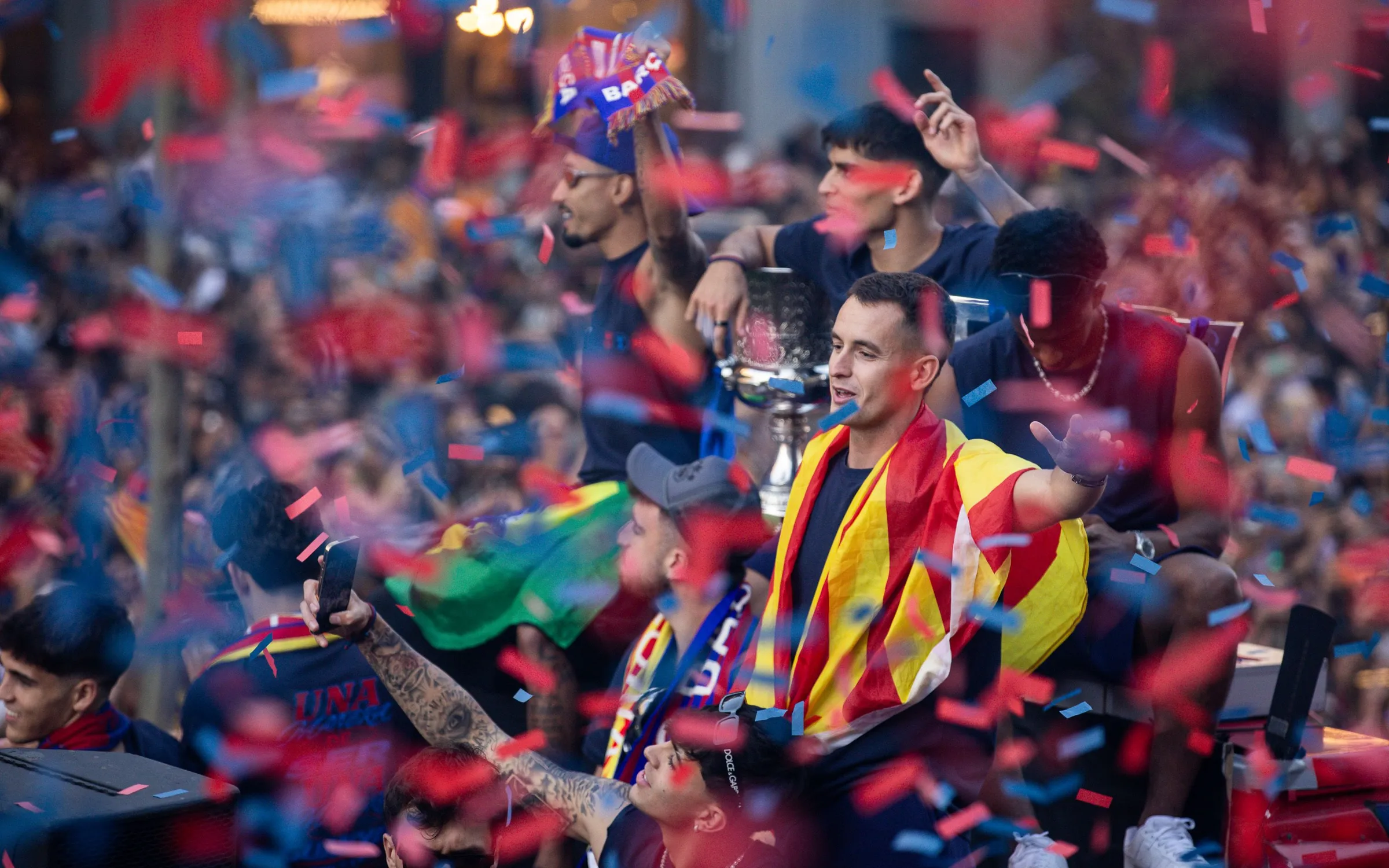
Family visits, vermut in hand, and Barça winning basically everything except the ones stolen by refs. Copa del Rey, Supercopa, La Liga—what a fun season to be a fan! 400,000 fans showed up for the parade, which felt about right.
The Vuelta a España Femenina came through town, so we stood curbside with drinks and enthusiasm. Cam and friends did their own biking, but downhill and in dirt. Took a trip up to Costa Brava with my sister for some sun and both Greek and Roman ruins. Strong spring!
https://petsolt.com/wp-content/uploads/2025/07/2025-06-Spring-x-14-of-21.jpeg15362048Davidhttps://petsolt.com/wp-content/uploads/2024/07/petsolt_logo_2023_catalan-300x300.pngDavid2025-06-30 14:22:192026-05-16 13:55:5420 from Spring ’25
One of the great things about living in Barcelona is that there’s always something happening. One of the confusing things about living in Barcelona is that there’s always something happening. You step out to grab bread and walk into a parade. You try to meet a friend and get blocked by a troop of devils with firecrackers. It’s charming. It’s chaotic. It’s frequently loud.
So we made a page for it.
The new Barcelona Events Calendar is our attempt to make sense of the city’s non-stop cultural agenda—from the big-ticket items like Festes de Gràcia and Primavera Sound, to smaller, weirder gems like the Sant Medir candy-throwing cavalcade or the inexplicably hypnotic human tower rehearsals.
It’s not exhaustive (neither are we), but we’ll be adding to it regularly. And know that we didn’t just copy this all from Wikipedia while nursing a cortado. No, we worked hard on it and got most of it from ChatGPT while nursing a vermut! Think of it as a rolling archive of what makes Barcelona tick: the saints, the drummers, the neighborhood rivalries, the castellers who you watch no matter how many times you come across them.
We made this for anyone who’s ever asked, “Wait, why are there fireworks again?”—and also for our future selves, who will inevitably forget.
Check it out, and if you know an event we’ve missed (especially one involving human towers or some sort of tasting something), let us know. We’re easily tempted.
Festa Major de Gràcia: Day 1 of our move to Barcelona — August 2020Jean Bouin 10K: Barcelona’s Oldest Race with a family visitor — December 2024
https://petsolt.com/wp-content/uploads/2025/05/Top-Results-1-of-1.jpeg15362048Davidhttps://petsolt.com/wp-content/uploads/2024/07/petsolt_logo_2023_catalan-300x300.pngDavid2025-05-02 17:29:002026-05-16 18:03:47A Calendar for the Curious